
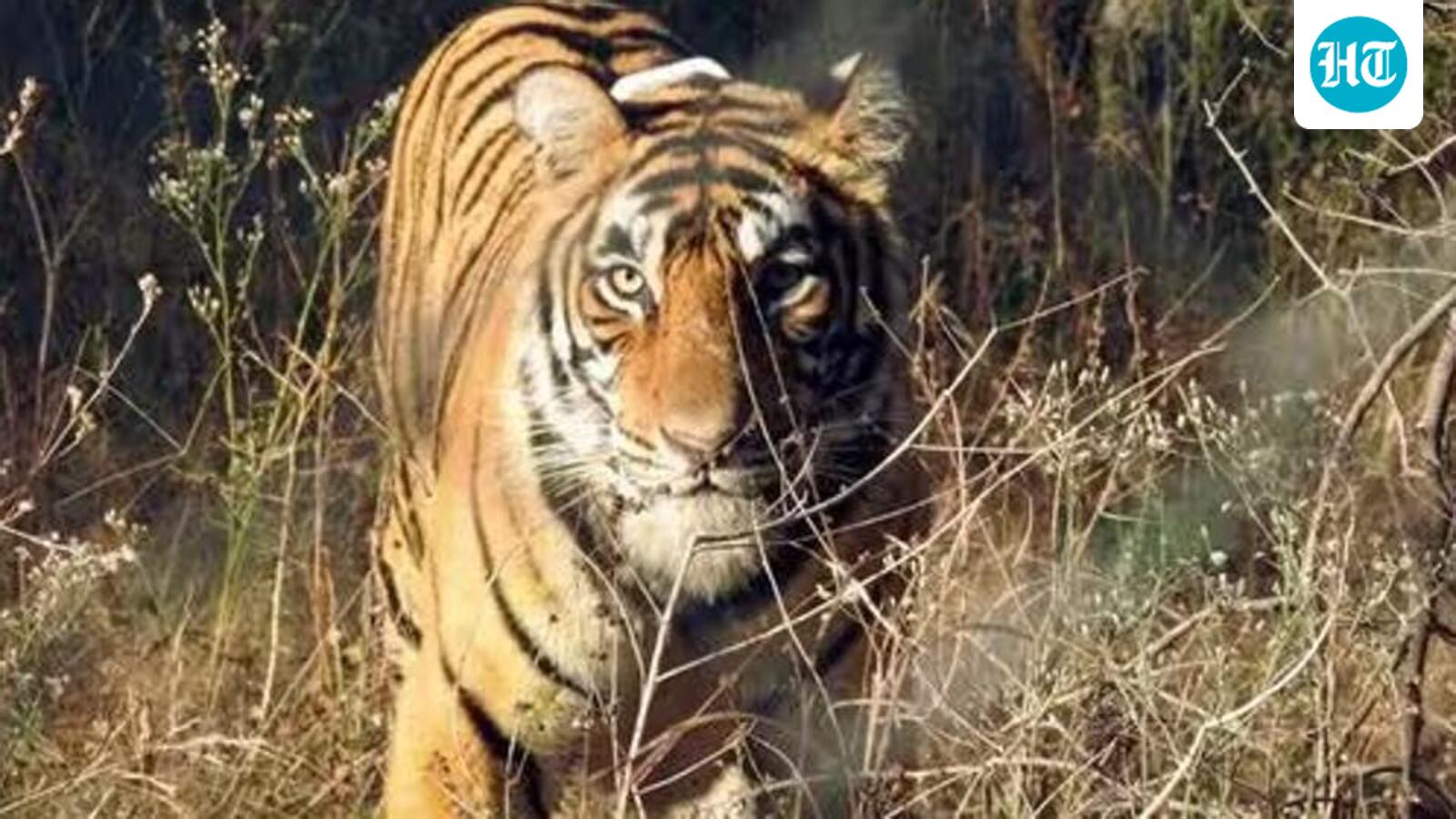
Airlifted Tigress from MP's Pench Reserve Acclimatising Well at Ramgarh Vishdhari
In a testament to India's commitment to tiger conservation and inter-state cooperation, a three-year-old tigress has been successfully airlifted from the Pench Tiger Reserve in Madhya Pradesh to the Ramgarh Vishdhari Tiger Reserve in Rajasthan's Bundi district. The daring operation, involving a team of experts and cutting-edge technology, has set a new benchmark for scientific wildlife management in the country.
On a chilly winter evening last month, the Indian Air Force MI-17 helicopter soared through the skies, carrying PN-224, the tigress, in a specially designed cage. The journey lasted approximately two and a half hours, with the helicopter departing from Sukatra airstrip in Madhya Pradesh and arriving at Ramgarh Vishdhari Tiger Reserve at around 6 pm. The operation was a culmination of weeks of meticulous planning and coordination between the Madhya Pradesh and Rajasthan Forest Departments.
At the forefront of this effort were Dr Akhilesh Mishra, a wildlife veterinarian at Pench Tiger Reserve, and Dr Prashant Deshmukh, a wildlife expert from the Wildlife Conservation Trust (WCT). Their team, which included forest officials from Rajasthan and local rangers, worked tirelessly to ensure the tigress's safe transport. The operation was guided by Pench Tiger Reserve field director Devprasad J and deputy director Rajneesh Kumar Singh.
The primary objective of this translocation was to increase the tiger population in Ramgarh Vishdhari Tiger Reserve while strengthening genetic diversity among different tiger landscapes. This represents a critical component of India's broader tiger conservation strategy, addressing the need to maintain healthy genetic pools across fragmented tiger populations in the country.
The authorities at Pench Tiger Reserve employed modern technology to identify and monitor the tigress before capture. Approximately 50 AI-based camera traps and motion sensor cameras were strategically positioned throughout the reserve to accurately track the big cat's health and behavior. This systematic approach ensured that the selected tigress was in optimal condition for relocation.
The entire translocation process was conducted systematically over approximately one month, involving unprecedented coordination between the two state forest departments. This extended preparation period allowed for thorough planning and risk mitigation, a testament to the expertise and dedication of the team involved.
The successful airlift of the tigress has significant implications for tiger conservation in India. By introducing new genetic material, the operation reduces the risk of inbreeding depression and enhances the adaptive capacity of the tiger population in Rajasthan. Furthermore, it sets a precedent for future conservation initiatives, demonstrating the feasibility of coordinated wildlife management across state boundaries.
The use of aerial transport in this operation represents an advanced approach to wildlife management, minimizing stress on the animal during the relocation process. This innovative method has the potential to revolutionize tiger translocation programs in India, allowing for more efficient and humane relocation of big cats.
As the tigress begins to acclimatize to her new surroundings, it is a moment of triumph for Indian conservation efforts. The airlift operation has not only strengthened the genetic foundation of the Ramgarh Vishdhari Tiger Reserve population but has also showcased the country's commitment to scientific, technology-driven wildlife management. As we move forward in this journey of conservation, one thing is clear: India is leading the way in protecting its majestic tigers and preserving their place in the country's rich natural heritage.
📰 Source: Hindustan Times - States