Delhi Court Reserves Order Against Sajjan Kumar in 1984 Anti-Sikh Riots Case
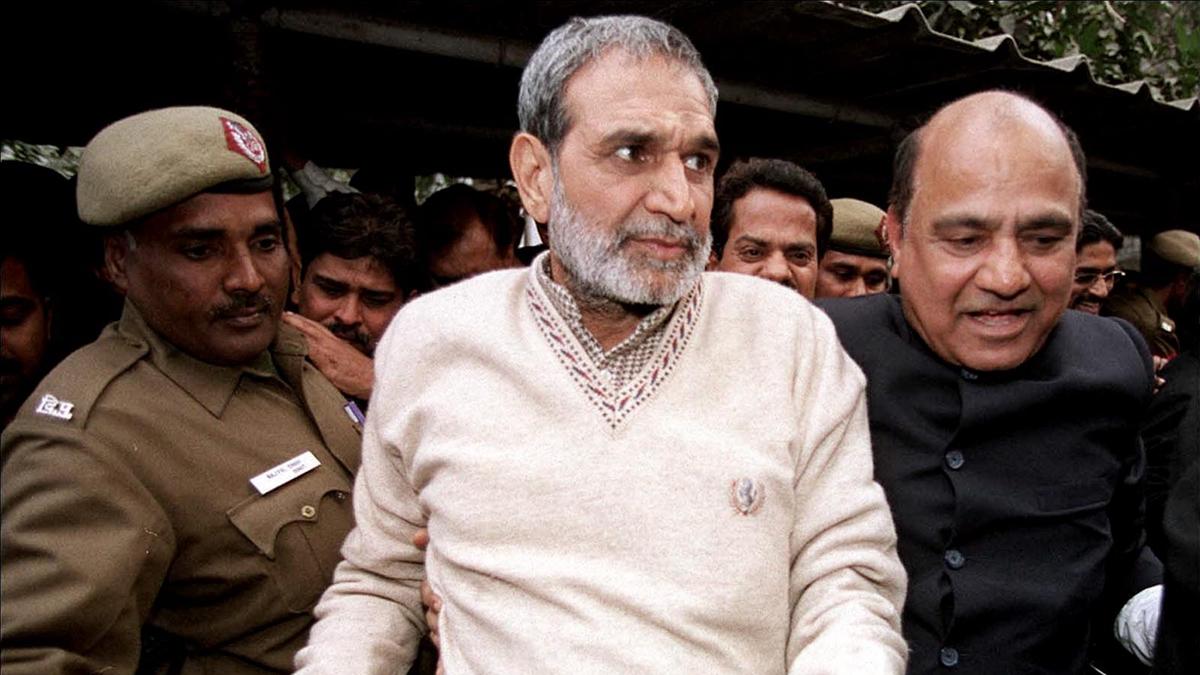
A somber day in the annals of India's judicial history has come and gone, as a Delhi court reserved its verdict in a case that has haunted the nation for nearly four decades. Former Congress MP Sajjan Kumar, accused of complicity in the 1984 anti-Sikh riots, has been at the receiving end of the judicial system's scrutiny, with the court reserving its order until January 22.
The case, which began its final arguments in January 2024, involves two separate FIRs registered by a special investigation team (SIT) in February 2015, based on complaints of violence in Delhi's Janakpuri and Vikaspuri areas during the riots. Kumar, an influential Congress leader at the time of the riots, has been accused of inciting violence that led to the killing of two men – Sohan Singh and his son-in-law Avtar Singh – on November 1, 1984, in Janakpuri, and Gurcharan Singh, who was allegedly set ablaze on November 2, 1984, in Vikaspuri.
The 1984 anti-Sikh riots were a ghastly chapter in India's history, erupting in the aftermath of Prime Minister Indira Gandhi's assassination by her Sikh bodyguards. The violence that followed targeted Sikh communities across Delhi and other parts of the country, leaving a trail of bloodshed and devastation. According to the Nanavati Commission, which was constituted to investigate the violence and its aftermath, there were 587 FIRs filed in Delhi related to the riots, with 2,733 people killed.
Kumar's role in the riots has been a subject of investigation and scrutiny for decades. An FIR was initially lodged in 1991, but a Delhi court found insufficient evidence to initiate prosecution in 1994. However, the case remained dormant for over two decades until a special investigation team was formed in February 2015 to reinvestigate cases from the 1984 riots. The SIT registered two FIRs against Kumar in the same month, and after years of investigation and prosecution, the court finally framed charges against him in December 2023.
The case against Kumar is significant not only because of the gravity of the allegations but also because of the challenges involved in prosecuting communal violence cases decades after they occur. The case highlights the issues of evidence preservation, witness availability, and the difficulty in securing convictions in cases that are often complicated by the passage of time.
The conviction record in 1984 anti-Sikh riots cases has been remarkably limited. Of the 587 FIRs filed in Delhi, approximately 240 were closed by police as "untraced" and 250 cases resulted in acquittal. Only 28 cases resulted in convictions, with about 400 persons convicted overall and approximately 50 convicted for murder. Kumar's case represents one of the few high-profile convictions in these decades-old cases.
In a separate case, Kumar was convicted and sentenced to life imprisonment by the Delhi High Court in February 2025 for the murders of two persons during the riots. However, he was acquitted in another case in September 2023 over one murder charge.
The reserved order represents a critical juncture in efforts to secure accountability for the 1984 anti-Sikh riots, which have largely gone unpunished for four decades. The January 22 verdict will determine whether Kumar faces additional convictions and sentences in the Janakpuri and Vikaspuri violence cases. This case underscores the need for the justice system to take a strong stand against communal violence and ensure that those responsible are held accountable for their crimes.
As the nation waits with bated breath for the court's verdict, one thing is clear – the 1984 anti-Sikh riots are a painful reminder of the need for accountability and justice in India.
📰 Source: The Hindu - National