BJP's Pujya Bapu Gambit: Mamata Banerjee Slams Move to Remove Gandhi's Name from MGNREGA
In a move that has left many in the country reeling, the Bharatiya Janata Party (BJP)-led central government has approved a significant overhaul of the Mahatma Gandhi National Rural Employment Guarantee Act (MGNREGA), renaming it the Pujya Bapu Rural Employment Guarantee Act (PBREGA) or Viksit Bharat—Guarantee for Rozgar and Ajeevika Mission (Gramin) Bill (VB-G RAM G Bill). The change, which took effect on December 12, 2025, has been met with fierce criticism from opposition leaders, including West Bengal Chief Minister Mamata Banerjee, who has accused the BJP of "pushing the country towards its end" by removing Gandhiji's name from the scheme.
The MGNREGA, originally enacted in 2005 as the National Rural Employment Guarantee Act (NREGA) and renamed in 2009 to honor the nation's beloved leader, has been a cornerstone of India's rural development efforts, providing a legal right to work for millions of rural households. However, the scheme has faced challenges in implementation, with average workdays averaging only 50 days per household, compared to the guaranteed 100 days. The 2025 changes aim to increase the guaranteed workdays to 125 days, but critics argue that the move is more about rebranding the scheme to suit the BJP's ideological agenda.
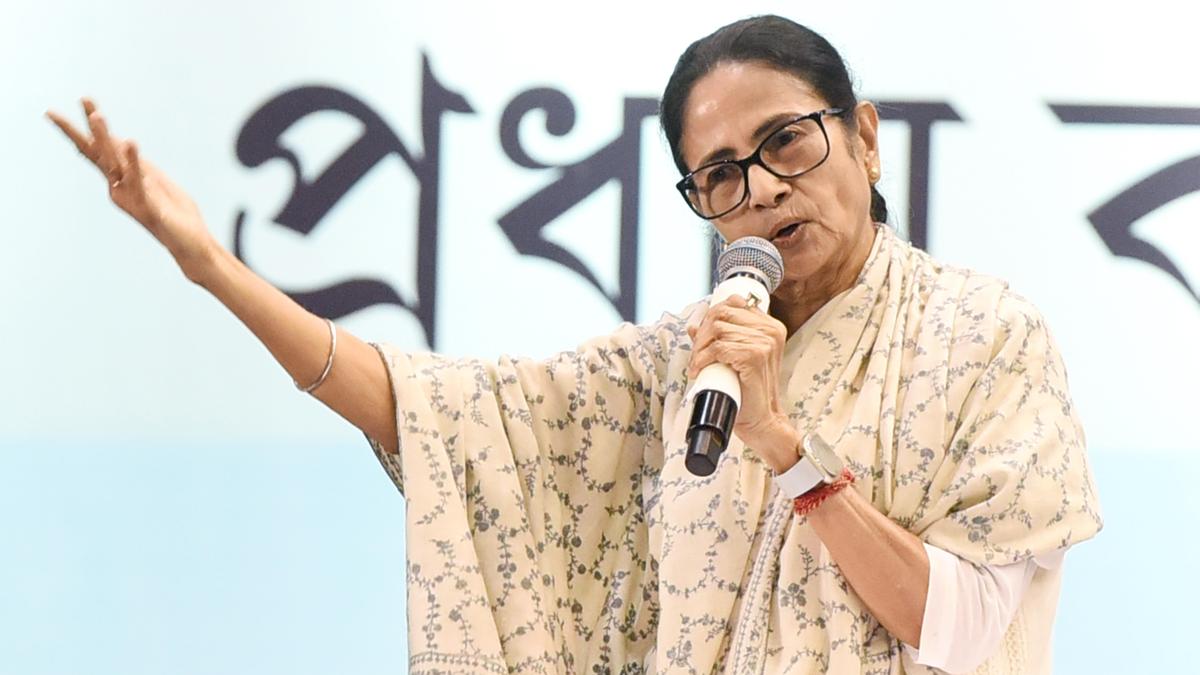
Banerjee, a vocal critic of the BJP's policies, has taken to social media to express her dismay at the move, stating that the removal of Gandhi's name from the scheme is a calculated attempt to erase the nation's history and legacy. "This is a brazen attempt to rewrite history and undermine the nation's values," she tweeted. "The BJP is pushing the country towards its end by removing Gandhiji's name from the MGNREGA. This is a slap in the face of the nation's conscience."
The BJP, however, has defended the move, arguing that the renaming honors Gandhi's spirit by reforming the scheme rather than merely retaining his name. "The change reflects our commitment to improving the lives of rural Indians, and we believe that the new name will help us to better serve the needs of our citizens," said a government spokesperson.
But critics argue that the move is more about ideological posturing than genuine reform. "The renaming is a symbolic attack on the nation's values, and it undermines the universal appeal of the scheme," said a senior opposition leader. "By removing Gandhi's name, the BJP is erasing the nation's history and legacy, and it's a slap in the face of the nation's conscience."
The implications of the move are far-reaching, with experts warning that the shift from a legal "right" to a "scheme" at central discretion could reduce reliability and increase uncertainty for rural households. "The scheme has been a lifeline for millions of rural Indians, and the change could have serious consequences for their livelihoods," said a rural development expert. "The BJP's move is a recipe for disaster, and it's a betrayal of the nation's trust."
As the country grapples with the implications of the move, one thing is clear: the BJP's Pujya Bapu gambit is a calculated attempt to rewrite history and undermine the nation's values. The question now is whether the nation will stand by its values or succumb to the BJP's ideological agenda.
Rs. 1.51 lakh crore allocated for the scheme, a 3% increase from previous allocations, but critics argue that the move is more about rebranding than genuine reform.
The shift from MGNREGA to PBREGA/VB-G RAM G has been met with opposition from across the country, with critics accusing the BJP of ideological posturing.
The move has sparked a heated debate on social media, with many expressing their dismay at the removal of Gandhi's name from the scheme.
The 2025 changes reflect the BJP's efforts to rebrand UPA initiatives, amid debates on ideology, RSS history, and Gandhi's role in the freedom struggle versus figures like Savarkar.
The renaming has been met with fierce criticism from opposition leaders, including West Bengal Chief Minister Mamata Banerjee, who has accused the BJP of "pushing the country towards its end".
The MGNREGA, originally enacted in 2005, has been a cornerstone of India's rural development efforts, providing a legal right to work for millions of rural households.
The scheme has faced challenges in implementation, with average workdays averaging only 50 days per household, compared to the guaranteed 100 days.
The 2025 changes aim to increase the guaranteed workdays to 125 days, but critics argue that the move is more about rebranding the scheme to suit the BJP's ideological agenda.
The implications of the move are far-reaching, with experts warning that the shift from a legal "right" to a "scheme" at central discretion could reduce reliability and increase uncertainty for rural households.
📰 Source: The Hindu - National